Voices of the Valley

Languages of
Kashmir

کٲشُر Kashmiri
ལ་དྭགས Ladakhi
ڈوگری Dogri
شینا Shina

Journey through the linguistic landscapes of Kashmir — where each language tells a story of tradition, resilience, and unity across centuries of mountain civilization.

Scroll
9.2MKashmiri Speakers
6.9MPahari & Gojri
3.8MDogri
1.1MBalti
0.8MShina & Burushaski
22.14MTotal Population
15+Distinct Languages
4Major Regions
9.2MKashmiri Speakers
6.9MPahari & Gojri
3.8MDogri
1.1MBalti
0.8MShina & Burushaski
22.14MTotal Population
15+Distinct Languages
4Major Regions
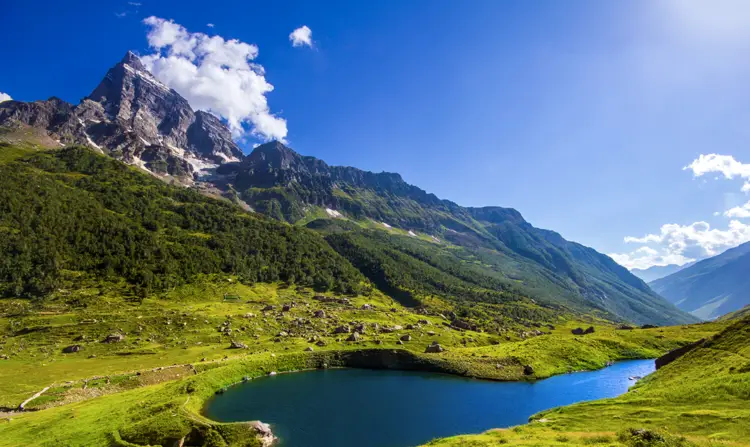
Shangrila Lake, Skardu at dusk

Discover the Voices of the Valley

Where Every
Word is a World

From the rushing glacial rivers of Gilgit-Baltistan to the verdant meadows of the Kashmir Valley — over 15 distinct languages have flourished here for centuries, each carrying its own literature, oral tradition, and cultural soul.

Begin the Journey 15+
Distribution

Linguistic
Geography

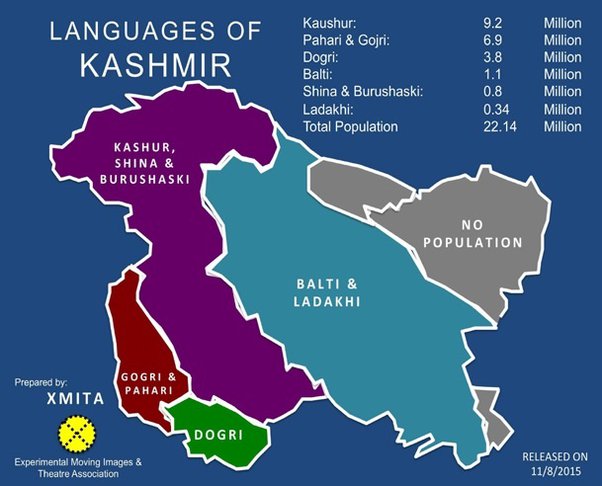
Kashmir's languages don't follow neat borders — they flow across valleys, mountain passes, and seasonal migration routes, creating a tapestry of mutual intelligibility and distinct cultural identity.

  • Kaushur
    9.2 M
  • Pahari & Gojri
    6.9 M
  • Dogri
    3.8 M
  • Balti
    1.1 M
  • Shina & Burushaski
    0.8 M
  • Ladakhi
    0.34 M
Languages of Kashmir Map
Languages of Kashmir — XMITA, 2015
Total Regional Population 22.14 M

Region 01

Azad Jammu
& Kashmir

01
ਪੰ
Most Spoken · AJK

Punjabi

Indo-Aryan · Lahnda Branch

The dominant tongue of Azad Kashmir, especially the Mirpur region. Closely related to Lahnda, Punjabi carries an extraordinary tradition of folk music, Sufi poetry, and storytelling. Migration has carried Mirpuri Punjabi to communities across the UK, creating a vibrant diaspora that bridges two continents and keeps the language richly alive.

Indo-Aryan Lahnda Mirpur UK Diaspora Hindko-Related
1st
Most Spoken Language in AJK
ਪੰਜਾਬੀ
In Gurmukhi Script
پنجابی
In Nastaliq Script
پہ
Mountain Dialect

Pahari-Potwari

Indo-Aryan · Hindko Continuum

Spoken in Rawalakot, Bagh, and Sudhnoti, Pahari-Potwari forms a dialect continuum with Hindko and shares mutual intelligibility with Punjabi. Its variations across valleys mirror the landscape's own dramatic geography — each ridge producing subtle phonetic shifts.

Rawalakot Bagh Hindko
گو
Nomadic Heritage

Gujari

Indo-Aryan · Rajasthani Ties

The voice of the Gujjar and Bakarwal pastoralists. Seasonal migration patterns have shaped its dialects, making Gujari a living linguistic map of movement through high mountain passes.

Gujjar Bakarwal Nomadic
Neelum Valley

Kashmiri

Dardic · Indo-Aryan

Spoken in Neelum Valley and scattered pockets of AJK, Kashmiri retains deep cultural and historical significance despite its minority status. Most speakers are bilingual — weaving identity across Urdu, Kashmiri, and Pahari with ease.

کٲشُر
Perso-Arabic
कॉशुर
Devanagari
Dardic Branch Bilingual Dual Script

Region 02

Jammu
& Kashmir

02
كش
Valley Dominant · 90% of Inhabitants

Kashmiri — Koshur

Dardic Branch · Indo-Aryan

The soul of the Kashmir Valley. Spoken by nearly 90% of its inhabitants, Koshur is a language of astonishing literary richness — home to Sufi verse, folk ballads, and a centuries-old poetic tradition. Written in both Perso-Arabic (Nastaliq) and Devanagari, its dual heritage mirrors the valley's layered civilization.

Dardic Nastaliq Script Devanagari Script Sufi Poetry 9.2M Speakers
9.2M
Total Speakers Worldwide
کٲشُر
In Nastaliq Script
90%
Valley Population Share
डो
Official Language of India

Dogri

Western Pahari · Indo-Aryan

The voice of Jammu — recognized among India's 22 official languages. Rich in oral poetry and folklore, Dogri carries the cultural memory of the Jammu hills across generations.

Official Status 3.8M Speakers Jammu Region
گو
Pastoral Communities

Gujari

Indo-Aryan · Rajasthani

In the hilly regions of J&K, Gujari is the language of Gujjar and Bakarwal communities whose seasonal migrations between summer and winter pastures have shaped its many dialects.

Gujjar Bakarwal Seasonal Dialects
پا
Hill Communities

Pahari

Western Pahari

Spoken across the mountainous zones of J&K, Pahari forms a rich dialect continuum with Hindko. Primarily heard in rural hill communities, its regional variations mirror the terrain's own diversity.

Rural Heritage Hindko
High Altitude

Ladakhi

Tibetic · Sino-Tibetan

Rooted in the Tibetan language family, Ladakhi thrives at altitude — in Leh, Zanskar, and Nubra. Traditionally written in Tibetan script, it carries Buddhist ritual and centuries of monastic learning.

Tibetan Script Buddhist 0.34M
شی
Ancient Dardic

Shina

Dardic · Indo-Aryan

One of the oldest Dardic languages, Shina echoes through Dras and Gurez valleys. Oral storytelling and poetry are its primary vessels of cultural transmission — a living archive of mountain memory.

Dardic Oral Tradition
کش
Oral Language

Kishtwari

Dardic · Kashmiri Influence

A language of subtle complexity, Kishtwari bears influences from both Kashmiri and Pahari while maintaining its own unique phonetic identity. Primarily oral, it has minimal literary documentation — making every living speaker precious.

Kishtwar District Primarily Oral
བྲ
Critically Endangered

Brokskat

Dardic · Shina Variant

A rare variety of Shina spoken in Ladakh with traits so distinct it stands apart even from its parent language. With a critically small speaker community, Brokskat is at the edge of living memory — urgent documentation is needed.

Endangered Ladakh Shina Variant
"A language is not merely words — it is a civilization worn on the tongue, a landscape carried in the breath, a people living in sound."
On the Linguistic Heritage of the Himalayas

Region 03

Gilgit-Baltistan

03
شن
Most Widely Spoken in GB

Shina

Dardic · Indo-Aryan

The lingua franca of Gilgit-Baltistan, Shina dominates the Gilgit and Diamer districts. Its family of dialects varies significantly across valleys, each shaped by the rivers and gorges of the Karakoram. As the principal Dardic language of the region, Shina speakers often bridge communities through Urdu as a shared second tongue.

Gilgit Dominant Dardic Multiple Dialects Diamer
#1
Language of Gilgit-Baltistan
شینا
In Perso-Arabic Script
بل
1.1M Speakers

Balti

Sino-Tibetan · Tibetan Branch

A Tibetan-related language of exceptional depth — Balti retains classical Tibetan structure while incorporating Persian and Urdu loanwords across centuries of cultural exchange in Skardu, Shigar, and Kharmang.

Tibetan Branch Skardu Perso-Arabic Script
بو
Language Isolate

Burushaski

Unclassified · Language Isolate

An enigma of world linguistics — Burushaski has no known relatives in any language family on earth. Spoken in Hunza, Nagar, and Yasin by 55–60,000 people, it is a linguistic universe unto itself.

Isolate Hunza-Nagar Mystery Origin
خو
Oral Poetry

Khowar

Dardic · Chitrali

The language of Ghizer, Khowar possesses a well-developed oral tradition of poetry and folklore. Written in Perso-Arabic, its speakers often navigate Urdu for administration and education.

Ghizer Dardic Folk Poetry
و
Eastern Iranian

Wakhi

East Iranian · Indo-Iranian

Belonging to the Eastern Iranian branch, Wakhi connects Upper Hunza to the Wakhan Corridor. Closely related to Tajik and Persian, Wakhi speakers are multilingual navigators of several linguistic and cultural worlds.

Upper Hunza Wakhan Tajik-Related Multilingual
چ
Endangered Languages

Chilisso & Gowro

Dardic · Kohistan

Lesser-known Dardic languages of Kohistan and the Indus Valley — Chilisso and Gowro are classified as endangered. With each passing generation, documentation becomes more urgent. Every lost word is a window closed on history.

Endangered Kohistan Preservation Needed

Region 04

Aksai Chin

04
Primary Language · Cultural Anchor

Ladakhi

Tibetic · Sino-Tibetan

The most widely spoken language of Aksai Chin, Ladakhi serves as both the primary means of communication and the cornerstone of cultural identity. Rooted in the Tibetan family, it carries Buddhist ritual, prayer chants, and centuries of oral tradition. Despite growing exposure to Hindi and English among younger generations, Ladakhi endures through monastic institutions, local schools, and the living pulse of community life — a symbol of remarkable cultural resilience.

Tibetic Buddhist Ritual Monastic Cultural Resilience
ལ་དྭགས་སྐད
In Tibetan Script
0.34M
Regional Speakers
བོ
Sacred & Scholarly

Tibetan

Tibetic · Classical

While less prevalent in daily conversation, Tibetan holds profound religious and scholarly importance in Aksai Chin. Monastic communities use Classical Tibetan for prayers, philosophical discussion, and the study of ancient Buddhist scriptures — preserving a spiritual heritage that spans millennia.

Classical Tibetan Monastic Use Buddhist Philosophy Sacred Texts

བོད་སྐད

Classical Tibetan Script

"The spoken form of Tibetan in Aksai Chin has adapted to regional dialects — leading to a blend of phonetic changes that reflect the dynamic nature of living language."

15+
Distinct Languages in the Kashmir Region
4
Major Administrative Regions Covered
3
Language Families: Indo-Aryan, Tibetic, Iranian
22M
People Whose Voices Shape This Heritage